Friday Chaps
In memory of Chris Bowen.
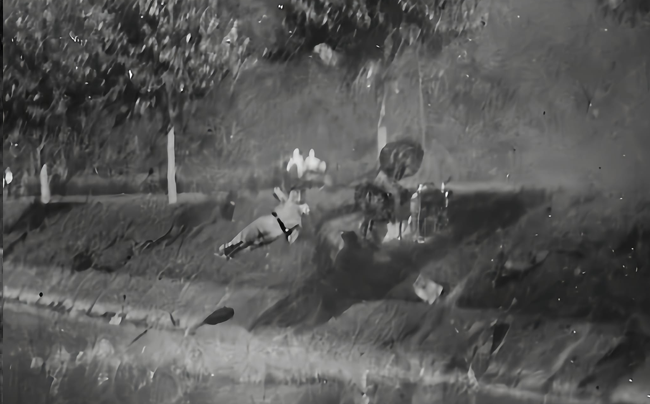
Abel Lourenço dos Santos at the Circuito da Gávea in 1935
This amazing phograph taken by Abel Lourenço dos Santos at the Circuito da Gávea in 1935 shows the fatal accident of Irineu Corrêa (who had won the race the previous year) on Avenida Visconde de Albuquerque on the first lap.
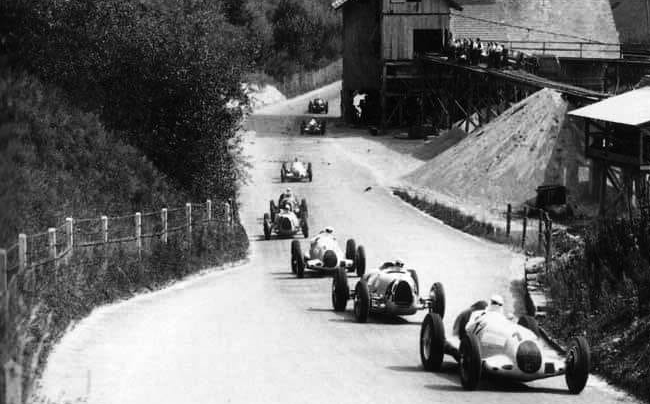
1936 Swiss Grand Prix
Rudolf Caracciola leading the pack through Quarry, just after the start of the 1936 Swiss Grand Prix
It ended as an Auto Union 1-2-3 with Rosemeyer taking the win from Achille Varzi and Hans Stuck.
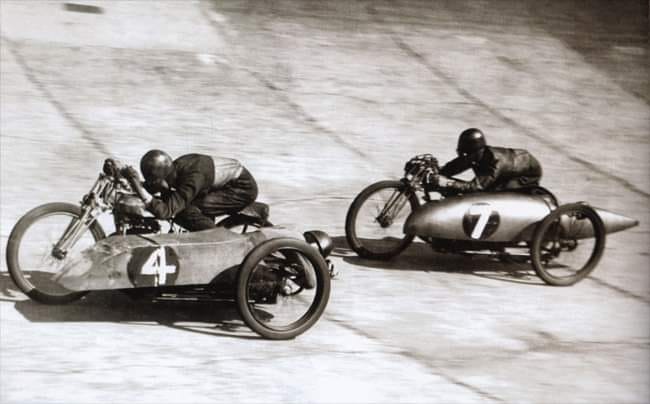
Combinations at Brooklands
It took me a second or two to realise that the side cars had passengers who seem to have had the sole purpose of providing ballast! This is Les Archer with unknown passenger, followed by (I think) Ben Bickell at Brooklands on 5th October 1929
Look out, here comes Woosh-Bonk!
Properly it’s a McLaren-Oldsmobile M3A, the very first McLaren single-seater. And the driver isn’t a Chap, it is in fact Patsy Burt.
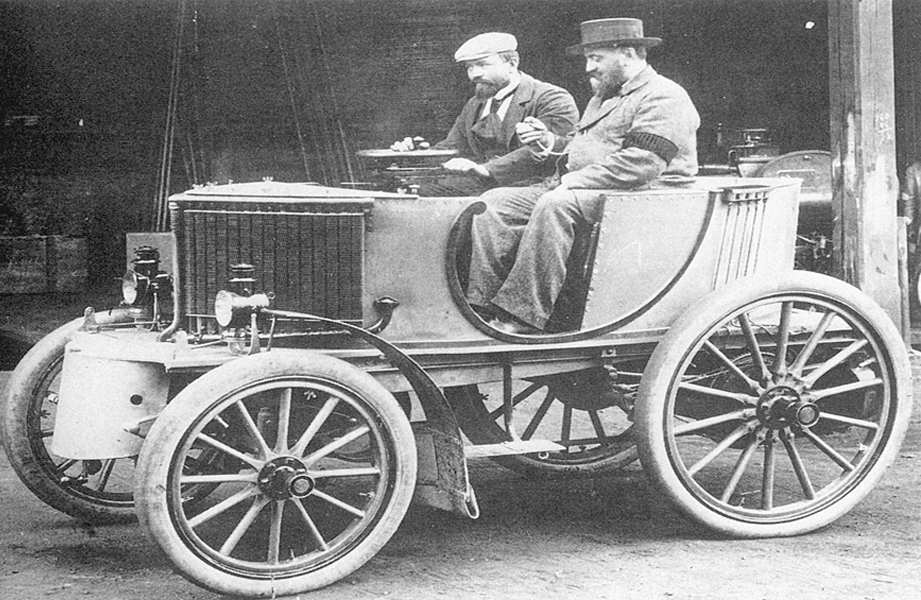
A load of Bollees!
Here we find Amedee Bollee (père) right and Amedee Bollee (fils) left, aboard one of the streamlined Amedee Bollee racing cars that they’d prepared for the 1898 Paris-Amsterdam race.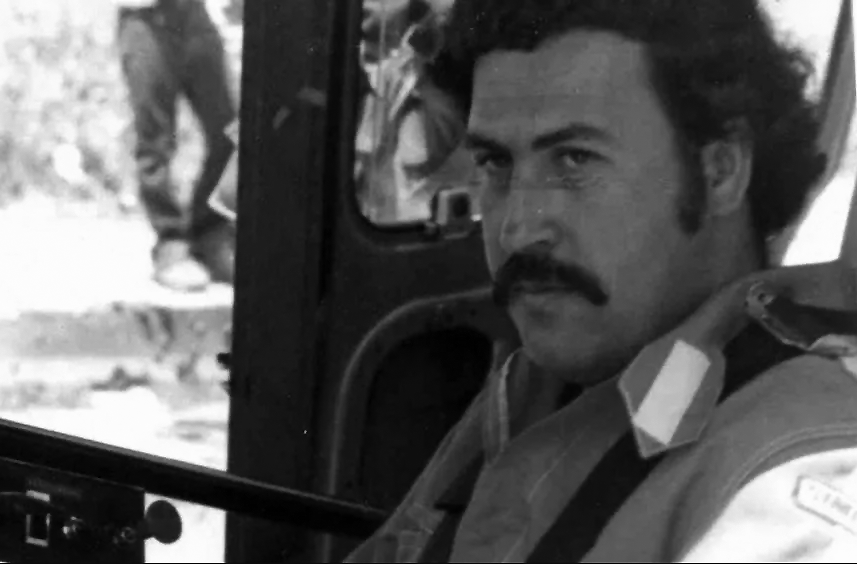
Pablo Escobar!!! No kidding either. Apparently old 'Narcos' was quite an accomplished driver.
Escobar started racing in 1979 driving a Renault 4 and was first mentioned in the papers in a footnote to a report on a round of the Copa Renault 4 Championship run on the 28th May that year at the Autodromo Ricardo Mejia just outside Bogotá.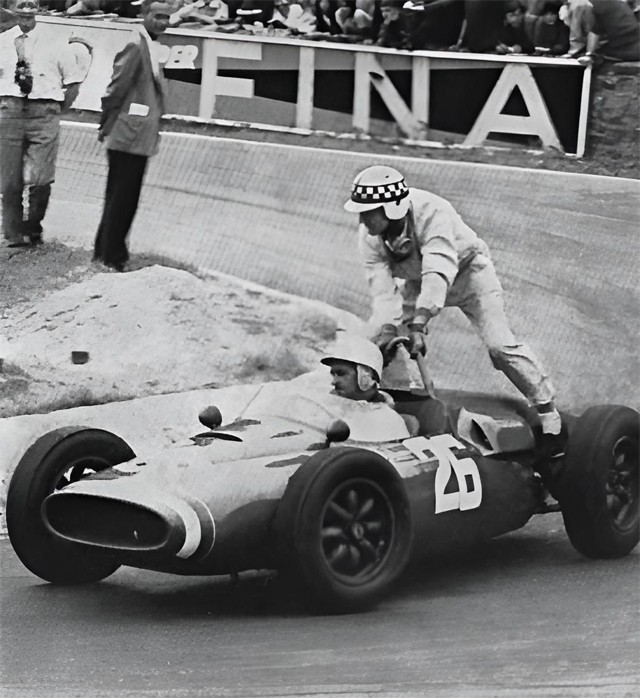
Innes Ireland taking a unique approach to F1 passenger carrying at Spa in 1961
At the wheel is Maurice 'Le Petoulet' Trintignant, the last pre-war driver to be involved in Formula One. Innes Ireland was a larger-than-life character who, as a rival team boss once said, he..."lived without sense, without an analyst and provoked astonishment and affection from everyone."Archie Frazer-Nash
Chap of the week: Archie Frazer-Nash; Properly (and according to our previous research, it would appear conventionally) equipped for serious competition at Brooklands in the early thirties.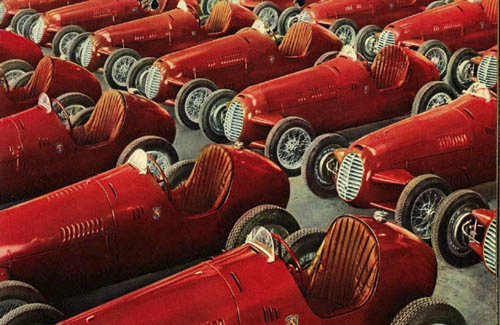
Few car builders have ever arrived with the impact that Cisitalia made in the fun-starved, post-war 1940s.
And few have ever shown so much promise and spent so much money, only to ultimately achieve so little.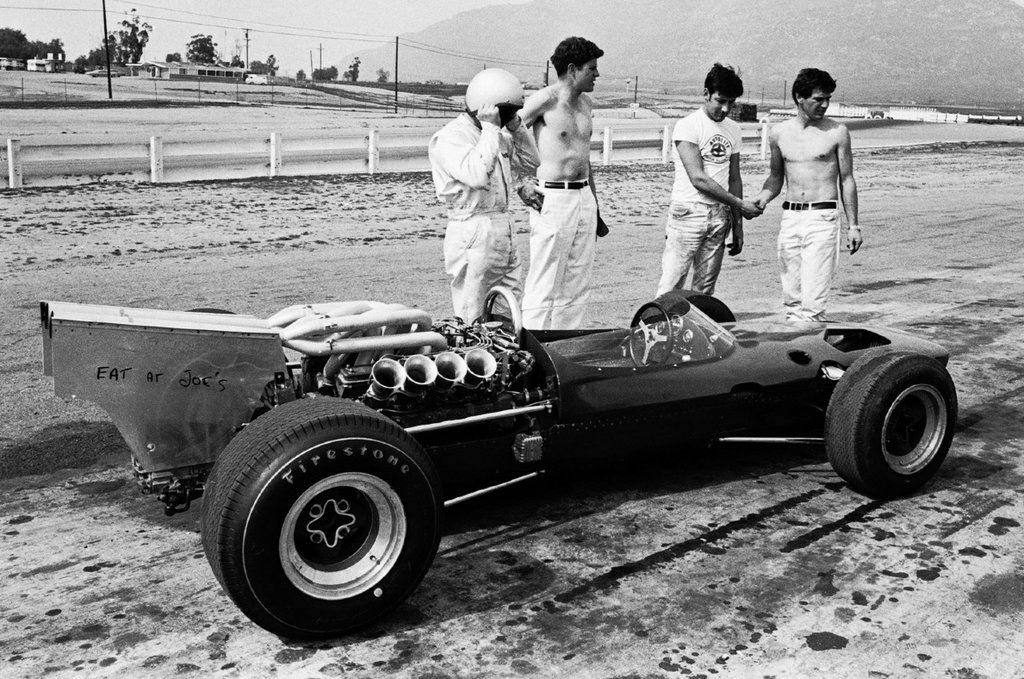
Bruce McLaren at Riverside back in 1966.
The Robin Herd designed Mallite monocoque McLaren M2B was used extensively as a test car for Firestone.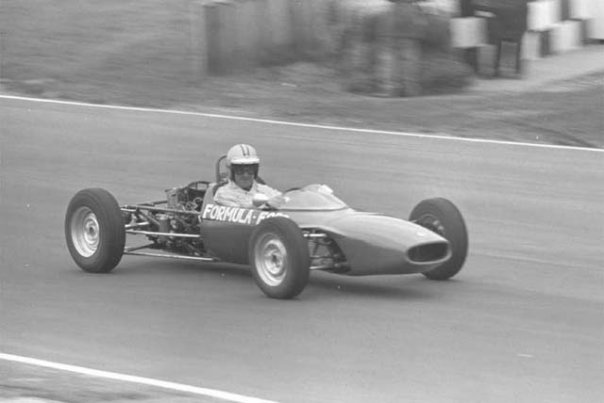
Denny Hulme was the son of a Victoria Cross winner and in 1967 became New Zealand's only ever World Champion.
Best of all, he was known for being grumpy. An image enhanced by the fact that he looked about 20 years older than he actually was. Journalists, whom he generally hated, called him "The Bear" on account of his grumpiness. He liked that.About
Friday Chaps was started by the late Chris Bowen. Over the past few years we worked with Chris to add and contibute to the Friday Chaps stories.
Chris started in F1 with Brabham in 1984 before moving on to Benetton, McLaren, Ligier, Arrows, Toyota, Red Bull, Honda, Brawn GP and in 2010 to Mercedes AMG Petronas.
Sadly Chris passed away suddenly in 2020. His knowledge and story telling ability were of the highest order and we have decided to continue his theme of Friday Chaps in his memory. We will republish some of his stories and observations and add to them hopefully doing justice to the standards he set!